
Eco-friendly packaging has moved from a nice-to-have to an expectation. Customers increasingly judge brands by their environmental footprint, and packaging is the most visible place that footprint shows up. This matters especially for CBD, hemp, and wellness brands, where “natural” and “clean” positioning makes sustainable packaging part of the product promise. But “eco-friendly” covers a lot of ground recyclable, biodegradable, compostable, recycled-content, plastic-free and the terms aren’t interchangeable.
This guide explains what eco-friendly packaging really is, the sustainable materials available, real examples, the benefits and challenges, and how to choose greener packaging for your product without overpaying or overclaiming.
What Is Eco-Friendly Packaging?
Eco-friendly packaging is packaging designed to minimize its environmental impact across its whole life from the materials it’s made of and how it’s produced, to how easily it’s reused, recycled, or returned to nature after use. Instead of virgin plastic destined for landfill, eco-friendly packaging leans on renewable, recycled, and recoverable materials like paper, board, and plant-based films.
The goal is simple: protect the product and the planet at the same time. It’s also called sustainable, environmentally friendly, or earth-friendly packaging with different names for the same core idea.
The Key Principles of Sustainable Packaging
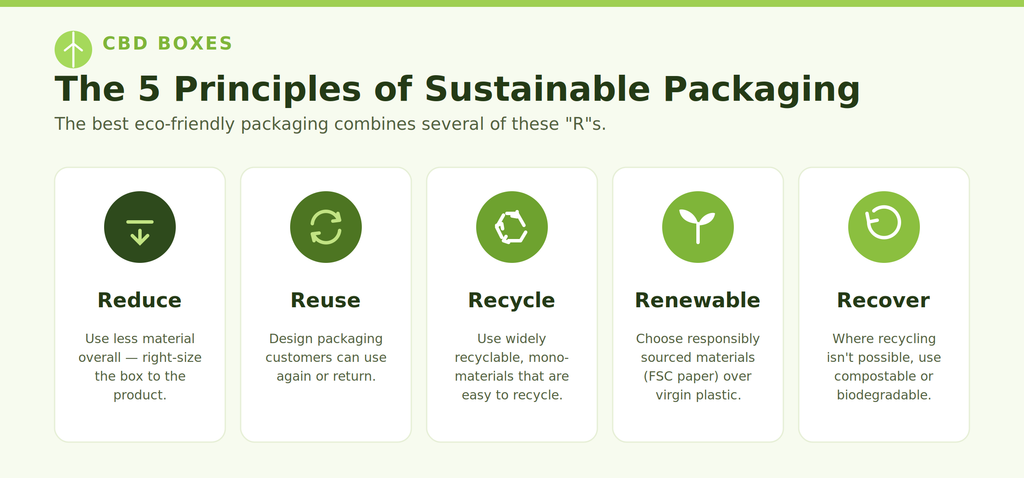
Good eco-friendly packaging follows a few guiding principles, often summarized as the “R”s:
- Reduce use of less material overall. Right-sizing a box to the product cuts material, weight, and shipping emissions in one move.
- Reuse design packaging customers can use again, or that works within a returnable system.
- Recycles use materials that are widely recyclable, and make them easy to recycle (mono-material, minimal mixed layers).
- Renewable choose materials from responsibly managed, renewable sources (like FSC-certified paper) rather than fossil-based virgin plastic.
- Recover where recycling isn’t possible, choose compostable or biodegradable materials that return safely to the environment.
The most sustainable packaging usually combines several of these, for example, a right-sized box made from recycled, recyclable board printed with water-based inks.
Eco-Friendly Packaging Materials
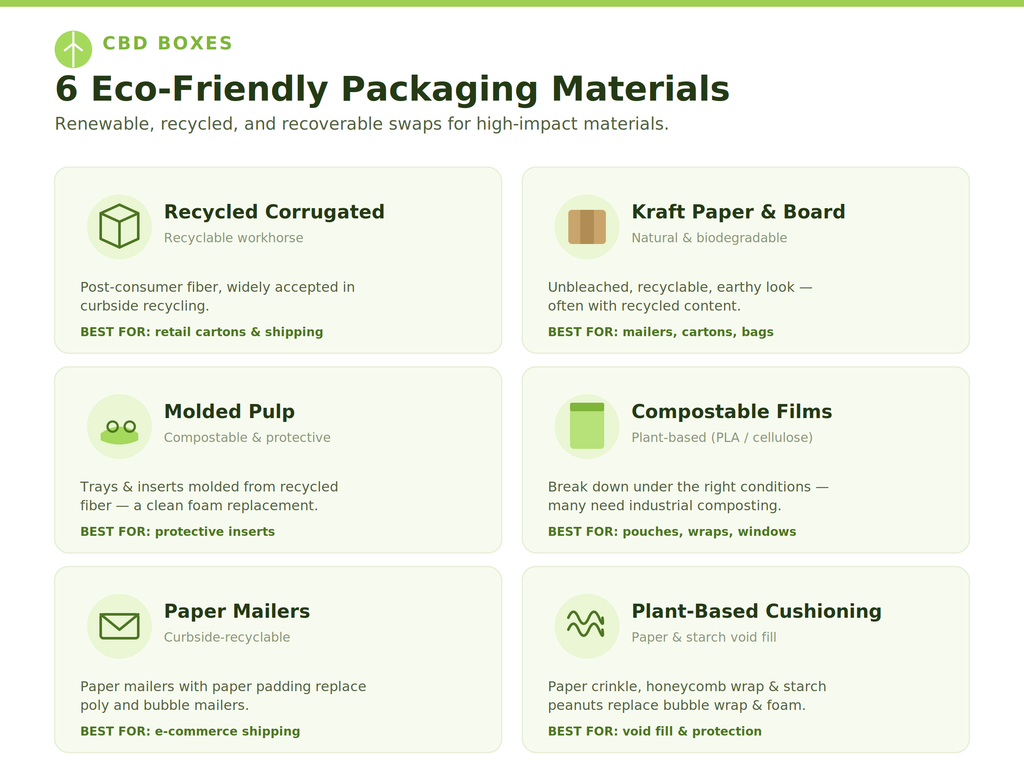
The material is where sustainability is won or lost. Here are the main sustainable packaging materials and where each fits.
Recycled paperboard & corrugated. Boxes made from post-consumer recycled fiber, then themselves recyclable. The workhorse of eco-friendly packaging is strong, printable, and widely accepted in curbside recycling. Ideal for retail cartons and shipping boxes.
Kraft paper & board. Unbleached, natural-looking, recyclable and biodegradable, often with recycled content. Its earthy aesthetic signals sustainability before a customer reads a word great for mailers, cartons, and bags.
Molded pulp. Trays and inserts molded from recycled paper or plant fiber biodegradable, compostable, and protective. A clean replacement for foam inserts.
Biodegradable & compostable films. Plant-based films (like PLA from corn starch, or cellulose) that break down under the right conditions used for pouches, wraps, and windows in place of conventional plastic. Note: many require industrial composting, not backyard.
Paper mailers & padded mailers. Curbside-recyclable alternatives to poly and bubble mailers, often with recycled paper cushioning instead of plastic bubbles.
Recycled & recyclable poly alternatives. Where a barrier is essential, recycled-content or recyclable mono-material films reduce impact versus virgin mixed plastics.
Plant-based cushioning & void fill. Paper crinkle, honeycomb wrap, and starch-based packing peanuts replace plastic bubble wrap and EPS foam.
Water-based or soy-based inks and minimal, solvent-free finishes round out a genuinely eco-friendly spec. Explore recycled and kraft options across our CBD boxes and hemp packaging ranges.
Examples of Eco-Friendly Packaging
Sustainable packaging shows up everywhere once you know what to look for: a kraft shipping box made from recycled corrugated; a molded-pulp tray cradling a fragile product instead of foam; a curbside-recyclable paper mailer with paper padding; a compostable pouch for coffee or snacks; honeycomb paper wrap replacing bubble wrap; a right-sized carton that eliminates half the void fill; and recycled tissue paper finishing the unboxing. Each swaps a high-impact material for a renewable or recoverable one while doing the same protective job.
What Is the Most Environmentally Friendly Type of Packaging?
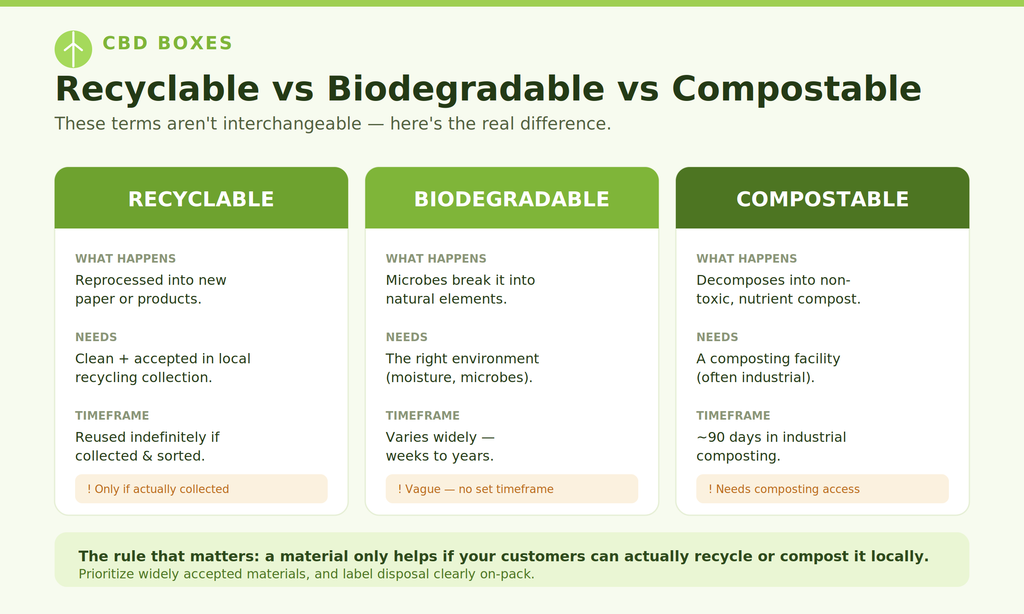
There’s no single winner; it depends on the product and how the packaging is actually disposed of in your customers’ region. That said, the strongest options generally share three traits: they use recycled or renewable content, they’re widely recyclable or compostable in practice (not just in theory), and they use the least material necessary to protect the product. For most brands, a right-sized box made from recycled, curbside-recyclable paper or corrugated is the most reliably eco-friendly choice, because paper and board have well-established recycling streams almost everywhere. Compostable films can be excellent, but only if your customers have access to the composting facilities they need otherwise they end up in landfill like any other packaging.
The Benefits of Sustainable Packaging
Brand trust and loyalty. Eco-conscious customers actively prefer, and pay more for, brands whose packaging matches their values.
Lower material and shipping costs. Right-sizing and lightweighting reduce material use and shipping weight sustainability that saves money.
Regulatory readiness. Plastic bans, extended-producer-responsibility rules, and packaging taxes are expanding; recyclable and reduced packaging keeps you ahead of them.
A better unboxing. Kraft, recycled board, and paper fill photographs beautifully and create a premium, natural unboxing that customers share.
Reduced footprint. Less virgin plastic and landfill waste are the outcome that matters most.
The Challenges (and How to Navigate Them)
Eco-friendly packaging isn’t friction-free, and being honest about that builds trust:
- Cost. Some sustainable materials cost more per unit though right-sizing and lighter materials often offset this. Ordering at volume also lowers the premium.
- Performance trade-offs. Barrier protection (against moisture, grease, oxygen) can be harder to achieve without plastic; choose the material to the product’s real needs.
- “Recyclable in theory vs practice.” A material is only sustainable if your customers can actually recycle or compost it locally. Prioritize widely accepted materials and label disposal clearly.
- Greenwashing risk. Vague claims (“eco,” “green”) without specifics erode trust and attract scrutiny. Say exactly what a package is “made from 100% recycled board, curbside recyclable” rather than making broad claims.
Eco-Friendly Packaging for Small Business, Food & Shipping
Small business. You don’t need enterprise volumes to go green. Start with a recycled kraft mailer or a right-sized recycled box, add paper void fill, and print with a simple, low-ink design and an affordable, credible eco setup that scales as you grow.
Food & edibles. Infused food and edible packaging has extra needs (food-safe contact, grease and moisture resistance), so look for certified food-grade recycled board, compostable liners, and grease-resistant paper rather than plastic-lined cartons where possible. Compostable and recyclable food packaging is one of the fastest-moving areas of the industry and pairs naturally with the clean positioning of CBD edibles and gummies.
Shipping. Eco-friendly shipping supplies recyclable corrugated mailers, paper tape, honeycomb wrap, and paper padding cut plastic from the part of packaging customers most associate with waste. Right-sizing your shipper is the single biggest win, reducing both material and emissions.
How to Make Your Packaging More Eco-Friendly
You don’t have to change everything at once. Start with the highest-impact, lowest-effort moves: right-size your boxes to eliminate wasted material and void fill; switch to recycled-content paper or corrugated; replace plastic fill and tape with paper alternatives; choose FSC-certified stock and water-based inks; design for recyclability by avoiding mixed-material laminates where you can; and label disposal clearly so customers actually recycle or compost it. Then communicate it honestly and specifically. Even a few of these changes measurably shrink your footprint and customers notice.
Ready to switch? We make eco-friendly custom CBD packaging recycled corrugated, kraft, and compostable options from a low 100-unit minimum with free design support. Request a quote or order samples to compare materials in hand.
Frequently Asked Questions
What is eco-friendly packaging?
Eco-friendly packaging is packaging designed to minimize environmental impact across its life cycle made from renewable, recycled, or recoverable materials (like paper, board, and plant-based films) that can be reused, recycled, or composted instead of ending up as landfill or virgin-plastic waste. It’s also called sustainable or environmentally friendly packaging.
What are the 7 types of packaging materials?
Commonly cited materials are: paperboard (cartons), corrugated fiberboard (shipping boxes), paper/kraft, glass, metal (tins/cans), rigid plastic, and flexible plastic films/pouches. Eco-friendly packaging favors the renewable and recyclable options paper, board, and recycled or plant-based alternatives to plastic.
What is the most environmentally friendly type of packaging?
There’s no universal answer, but a right-sized box made from recycled, widely recyclable paper or corrugated is usually the most reliable choice, because paper has established recycling streams almost everywhere. Compostable materials can be excellent where customers have access to composting. The greenest packaging uses recycled/renewable content, is recyclable or compostable in practice, and uses the least material necessary.
What are some examples of eco-friendly packaging items?
Recycled corrugated shipping boxes, kraft mailers, molded-pulp inserts (replacing foam), compostable pouches, paper padded mailers, honeycomb paper wrap (replacing bubble wrap), starch-based packing peanuts, recycled tissue paper, and right-sized cartons that cut void fill.
Is eco-friendly packaging more expensive?
Some sustainable materials cost a little more per unit, but right-sizing and lighter materials often offset the difference by cutting material and shipping costs, and ordering at volume lowers the premium. For many brands, the net cost difference is small and outweighed by customer preference and regulatory readiness.