
The CBD industry is booming, and so is consumer demand for brands that take sustainability seriously. Today’s buyers read labels, check materials, and reward companies that package responsibly. If you sell CBD oils, gummies, tinctures, or topicals, your packaging isn’t just a container it’s a statement about your values.
Eco-friendly CBD boxes help you reduce environmental impact, meet regulatory expectations, and build lasting trust with conscious customers. This guide breaks down the recyclable packaging materials worth knowing, answers the questions people ask most, and shows you how to make greener packaging choices for your brand.
Why Eco-Friendly CBD Packaging Matters
CBD customers tend to be health- and wellness-focused, and that mindset extends to the planet. Sustainable packaging delivers real advantages:
- Stronger brand loyalty — Shoppers increasingly choose brands that align with their environmental values.
- Reduced carbon footprint — Recyclable and biodegradable materials cut landfill waste and emissions.
- Regulatory readiness — Many regions are tightening packaging waste rules, so going green future-proofs your business.
- Premium shelf appeal — Kraft, minimalist, and recycled designs signal quality and authenticity.
Types of Recyclable Packaging Materials
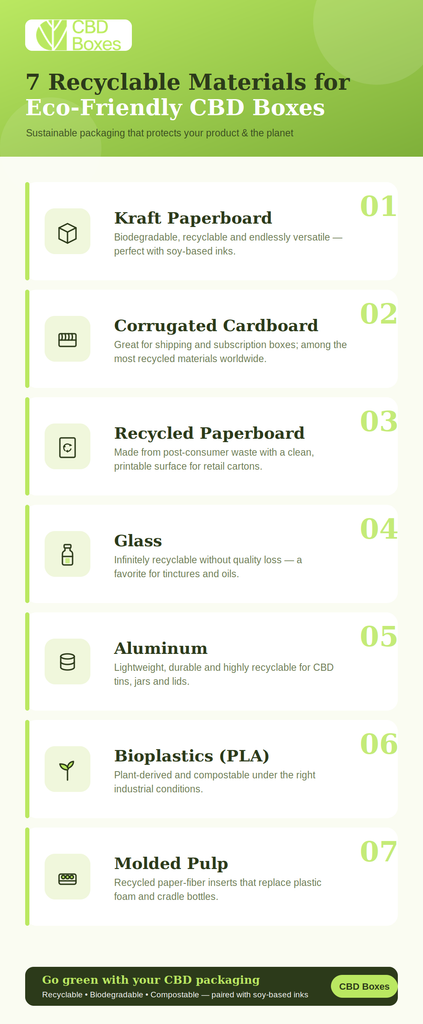
Choosing the right material is the foundation of eco-friendly CBD boxes. Here are the most reliable recyclable options for the CBD sector.
1. Kraft Paperboard
Made from natural wood pulp, kraft is biodegradable, recyclable, and endlessly versatile. Its earthy, unbleached look is perfect for CBD branding and works well with soy-based inks.
2. Corrugated Cardboard
Ideal for shipping and subscription boxes, corrugated board is one of the most widely recycled materials worldwide and offers excellent product protection.
3. Recycled Paperboard (CRB/CCNB)
Manufactured from post-consumer waste, recycled paperboard delivers a clean, printable surface for retail-ready CBD cartons with a low environmental cost.
4. Glass
Fully recyclable and infinitely reusable without quality loss, glass is a favorite for CBD tinctures and oils though it pairs with recyclable outer boxes for safe transport.
5. Aluminum
Lightweight, durable, and highly recyclable, aluminum is used for CBD tins, jars, and lids, protecting products from light and air.
6. Bioplastics (PLA)
Derived from renewable sources like cornstarch, PLA offers a plastic-like feel while being compostable under the right conditions.
7. Molded Pulp Inserts
Made from recycled paper fibers, molded pulp replaces plastic inserts and foam, cradling fragile bottles securely.
Recyclable vs. Biodegradable vs. Compostable
These terms often get confused, so here’s the quick distinction:
- Recyclable — Can be reprocessed into new products (e.g., kraft, glass, aluminum).
- Biodegradable — Breaks down naturally over time through microbial action.
- Compostable — Breaks down into nutrient-rich soil under specific composting conditions.
The greenest CBD packaging often combines these properties for example, a recyclable kraft box printed with biodegradable, soy-based ink.
People Also Ask
What are 10 common types of packaging materials?
Paperboard, corrugated cardboard, glass, aluminum, steel, plastic, bioplastics, molded pulp, kraft paper, and flexible films are the ten most common packaging materials across industries.
What are the 7 types of packaging with examples?
The seven core packaging types are paperboard boxes (CBD cartons), corrugated boxes (shipping mailers), plastic packaging (bottles), rigid boxes (luxury CBD sets), glass containers (tinctures), metal tins (balms), and flexible packaging (pouches).
What are the different types of recyclable materials?
Common recyclable materials include paper, cardboard, glass, aluminum, steel, certain plastics (PET, HDPE), and some bioplastics processed at specialized facilities.
What are 10 examples of recyclable materials?
Kraft paper, corrugated cardboard, recycled paperboard, glass bottles, aluminum tins, steel cans, PET plastic, HDPE plastic, molded pulp, and paper-based labels.
Common Questions About Recyclability
Is bubble wrap recyclable?
Traditional bubble wrap is made from plastic film that most curbside programs won’t accept, but it can often be recycled at store drop-off points for plastic bags. For a greener alternative, use molded pulp or corrugated inserts.
What does curbside recyclable mean?
Curbside recyclable materials are those your local municipality collects directly from your home or business, typically paper, cardboard, glass, and select plastics without requiring a special drop-off.
What is the recyclable packaging logo?
The universal recycling symbol (three chasing arrows) indicates a material can be recycled. Printing it on your CBD boxes signals sustainability and guides customers on proper disposal.
Recyclable Packaging for Food-Grade & Ingestible CBD
For edibles, gummies, and ingestible tinctures, food-safe recyclable packaging is essential. Food-grade kraft, glass, and aluminum meet safety standards while staying eco-friendly. Always confirm your supplier uses food-contact-approved, recyclable materials and non-toxic inks.
Eco-Friendly Packaging for Small CBD Businesses
Sustainability isn’t only for big brands. Small CBD businesses can go green affordably by:
- Ordering recycled kraft boxes with minimalist designs
- Using reusable materials that double as storage
- Choosing water-based or soy-based inks
- Right-sizing boxes to reduce material waste and shipping emissions
- Adding a recycling logo and disposal instructions
How to Choose the Right Eco-Friendly CBD Box
Keep these factors in mind:
- Product type — Oils and tinctures need protective rigid or glass-friendly cartons; edibles need food-grade materials.
- Compliance — Include child-resistant features and required labeling where mandated.
- Branding — Kraft and recycled boards offer a premium, natural aesthetic.
- Certifications — Look for FSC-certified paper and recyclable-material seals.
- Print method — Soy and water-based inks keep the whole package recyclable.
Final Thoughts
Eco-friendly CBD boxes are no longer a nice-to-have; they’re a competitive advantage. By choosing recyclable materials like kraft paperboard, corrugated cardboard, glass, and aluminum, and pairing them with responsible printing and right-sized designs, you protect both your products and the planet.
Sustainable packaging tells your customers you care about more than the sale. In a crowded CBD market, that message builds the kind of trust that keeps buyers coming back.