
As CBD moves from a niche wellness trend into mainstream retail, the packaging around it has become just as important as the product inside. Gummies, oils, capsules, and tinctures all share one thing in common: they need to be kept safely out of the reach of children. That’s where child-resistant CBD packaging comes in a category that sits at the intersection of consumer safety, regulatory compliance, and brand presentation.
This guide breaks down what child-resistant packaging is, how it differs from tamper-evident and tamper-proof designs, what the rules actually require, and how to choose the right solution for your products.
What Is Child-Resistant Packaging?
Child-resistant (CR) packaging is designed to be significantly difficult for children under five to open, while still remaining accessible to adults. The concept comes from pharmaceutical safety: the same push-and-turn caps and squeeze-and-slide mechanisms that protect kids from prescription medicine now protect them from CBD edibles that can look and taste like ordinary candy.
Crucially, “child-resistant” does not mean childproof. No package is truly impossible for a determined child to open. The standard is about slowing a child down and reducing the likelihood of accidental ingestion not creating an impenetrable barrier.
The effectiveness of these packages is measured through standardized protocol testing, typically involving panels of both children and adults. A compliant design must stop the vast majority of children from accessing the contents within a set time window, while allowing most adults (including seniors) to open it without excessive difficulty.
Why CBD Products Need Child-Resistant Packaging
CBD gummies and edibles are the biggest driver of demand for CR packaging. Their bright colors, fruit flavors, and candy-like appearance make them especially appealing to young children, who cannot distinguish them from ordinary treats. Accidental ingestion of cannabinoid products by children has risen alongside product availability, prompting regulators and retailers to tighten packaging expectations.
Beyond safety, child-resistant packaging is often a condition of getting your product onto shelves at all. Many retailers, marketplaces, and payment processors now require CR-compliant packaging as part of their onboarding standards so compliant packaging protects both children and your route to market.
Child-Resistant vs. Tamper-Evident vs. Tamper-Proof
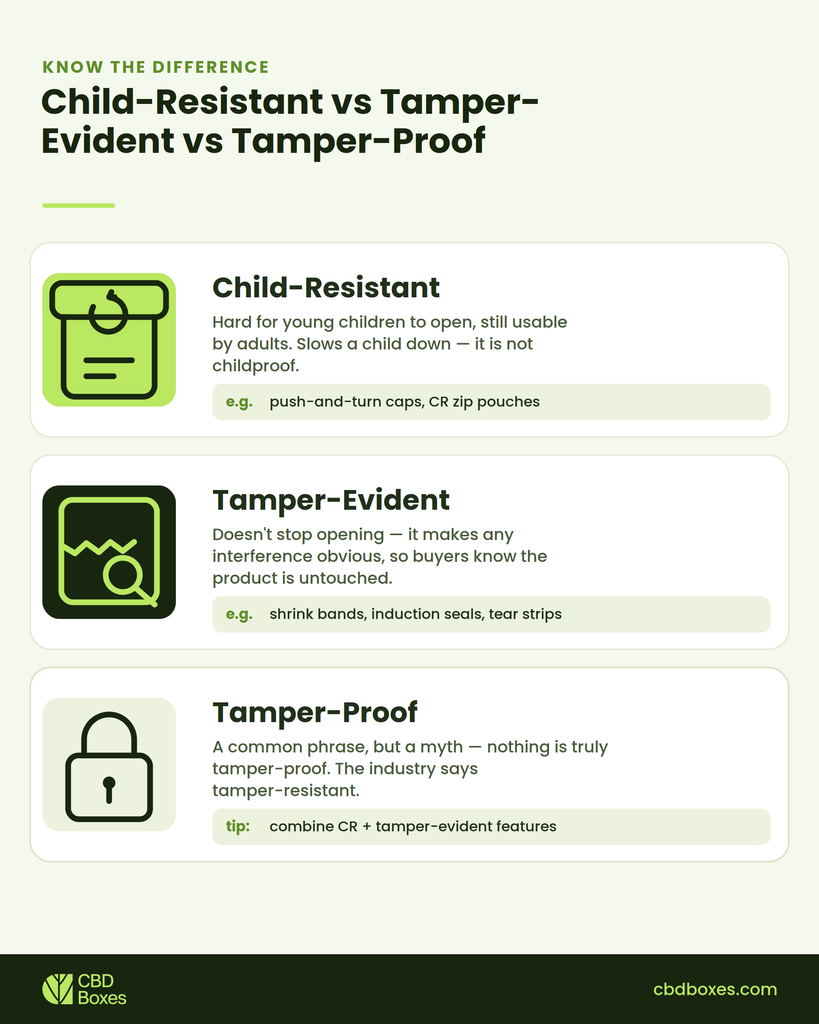
These three terms are frequently used interchangeably, but they describe different protections. Understanding the distinction helps you spec the right packaging rather than over- or under-engineering it.
Child-resistant packaging focuses on preventing children from opening the container. Think push-down-and-turn caps, child-resistant zipper pouches, and squeeze-to-open tins.
Tamper-evident packaging is designed so that any interference is visible. It doesn’t stop someone from opening the package, it makes it obvious if they have. Shrink bands, induction seals, breakaway caps, and perforated tear strips are all tamper-evident features. Their purpose is consumer trust: the buyer can see the product hasn’t been opened or contaminated before purchase.
Tamper-proof container is a common phrase, but it’s slightly misleading. No container is genuinely impossible to tamper with, which is why the industry prefers “tamper-evident” or “tamper-resistant.” When someone asks for a tamper-proof container, they usually mean packaging that both resists tampering and clearly shows evidence of it.
The strongest CBD packaging combines features: a container that is child-resistant and tamper-evident delivers safety for households with children and assurance for the buyer at the point of sale.
What Are the Packaging Requirements for CBD Products?
Requirements for CBD packaging vary significantly by jurisdiction, and they continue to evolve, so this section should be treated as an overview rather than legal advice. Always confirm current rules with a compliance professional in each market where you sell.
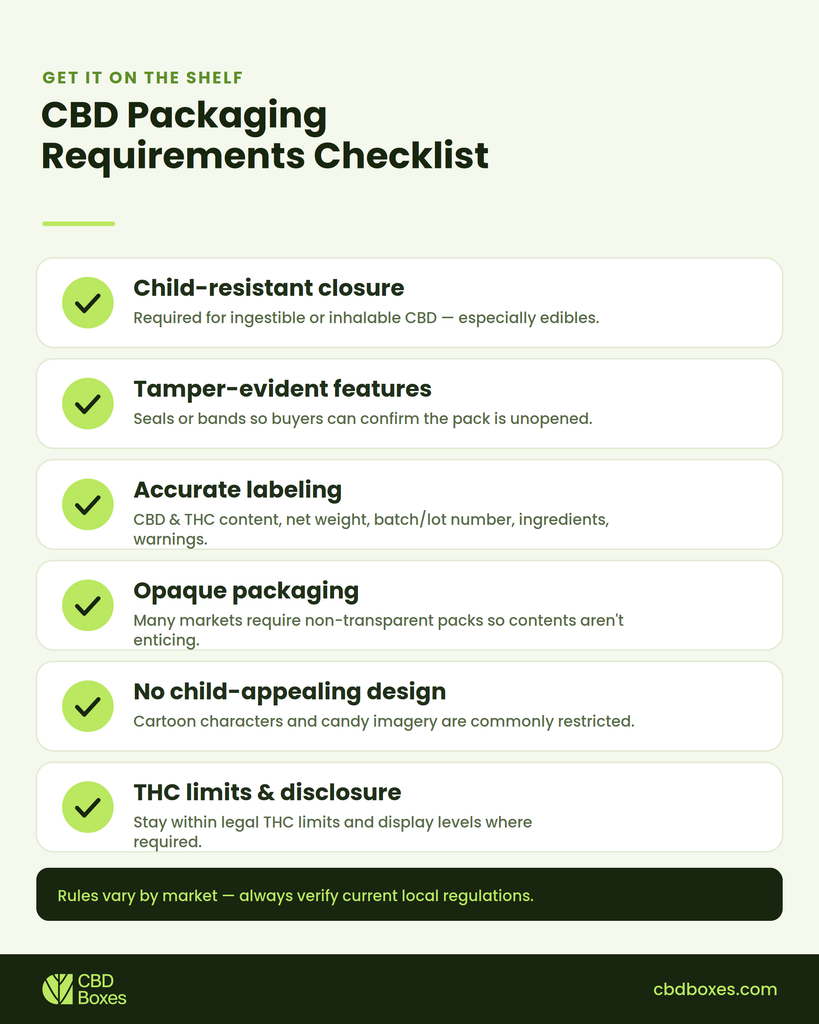
That said, common requirements across many regions include:
- Child-resistant closure for any ingestible or inhalable CBD product, especially edibles.
- Tamper-evident features so consumers can confirm the product is unopened.
- Accurate labeling, typically including cannabinoid content (CBD and THC), net weight or volume, batch or lot numbers, ingredients, and appropriate warnings.
- Opaque or non-transparent packaging in some markets, so the product isn’t visible and enticing to children.
- No marketing that appeals to children, meaning cartoon characters and candy imagery are often restricted.
- Restrictions on THC content, with packaging sometimes required to display THC levels prominently.
Because CBD sits in a regulatory gray zone in many countries governed by a patchwork of food, supplement, and cannabis rules, packaging compliance is one of the most scrutinized parts of the business. Getting it right protects your brand from recalls, fines, and delisting.
Common Types of Child-Resistant CBD Packaging
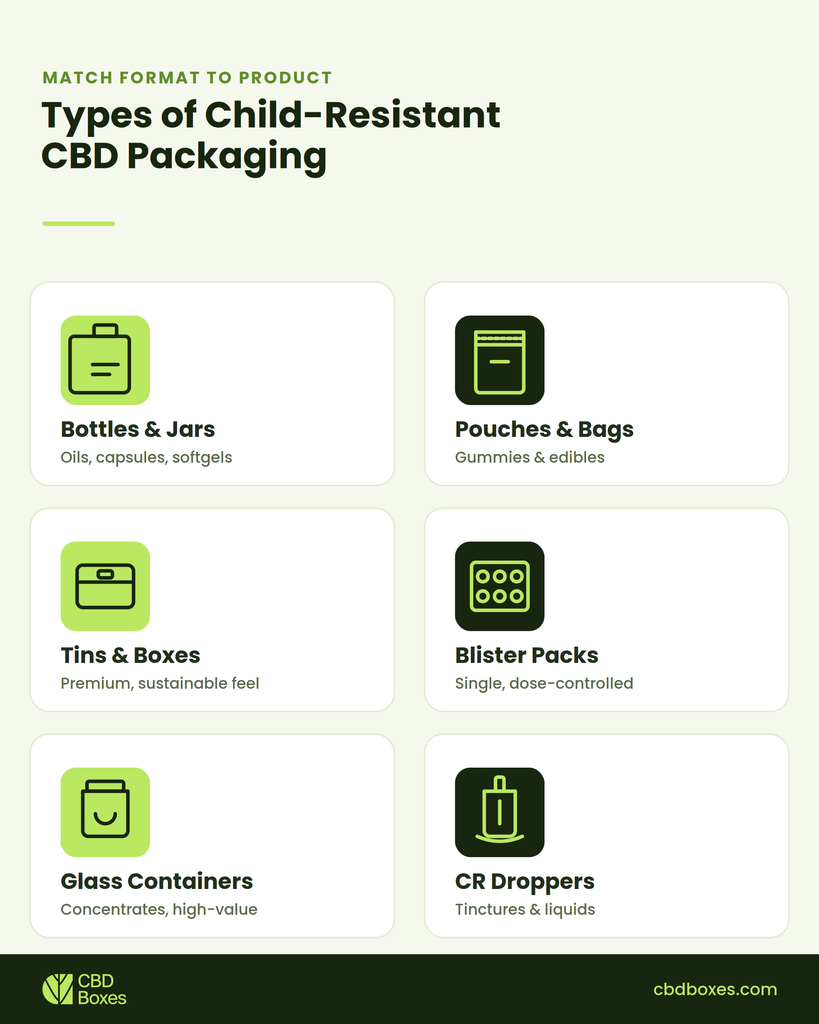
Different product formats call for different CR formats:
Child-resistant bottles and jars suit oils, tinctures, capsules, and softgels. Push-and-turn caps and CR droppers are standard here.
Child-resistant pouches and bags are popular for gummies and edibles. Resealable CR zippers keep the product fresh and safe across multiple uses, which matters for multi-serving bags.
Child-resistant tins and boxes offer a premium, sustainable feel. Slide-style tins and push-tab cartons provide CR protection with strong shelf presence.
Child-resistant blister packs work well for single-dose or dose-controlled products, combining CR opening with clear tamper evidence for each unit.
Child-resistant glass containers with CR lids are common for concentrates and higher-value products where a premium presentation is expected.
How to Choose Child-Resistant CBD Packaging
When selecting packaging, weigh these factors together:
Compliance first. Confirm the packaging is certified to the relevant child-resistance standard for your target markets, and ask suppliers for test documentation.
Product fit. Match the format to the product pouches for gummies, bottles for tinctures, blisters for dosed products.
User experience. Seniors are a major CBD demographic, so choose CR mechanisms that adults can actually open without frustration. Overly difficult packaging drives returns and negative reviews.
Sustainability. Recyclable, mono-material, and refillable CR options are increasingly available and increasingly expected by consumers.
Branding. CR packaging no longer has to look clinical. Custom printing, finishes, and structural design let you stay compliant while standing out.
Buying Child-Resistant CBD Packaging Wholesale
Most brands source CR packaging wholesale to control unit costs at scale. When evaluating child-resistant CBD packaging suppliers, look for:
- Documented certification and third-party test reports for child resistance.
- Consistent quality control across production runs, since a failed closure is a compliance failure.
- Customization options for size, color, print, and finish.
- Reasonable minimum order quantities that match your volume.
- Reliable lead times and the ability to scale with you as you grow.
A good supplier acts as a compliance partner, not just a vendor flagging regulatory considerations and helping you avoid costly packaging mistakes before they reach the shelf.
Frequently Asked Questions
What is child-resistant drug packaging?
Child-resistant drug packaging is protective packaging designed to make it very difficult for young children to open, while remaining usable for adults. Originally developed for prescription and over-the-counter medicines under poison-prevention rules, the same principles now apply to CBD and other cannabinoid products that could be harmful if ingested by children.
What does CBD stand for in packaging?
CBD stands for cannabidiol, a naturally occurring compound derived from the hemp or cannabis plant. In a packaging context, “CBD packaging” simply refers to containers and closures designed to store, protect, and legally market products that contain cannabidiol.
Which drugs are exempt from child-resistant packaging?
Exemptions vary by jurisdiction, but certain medications have historically been allowed in non-child-resistant packaging, often specific dosage forms, some sublingual products, particular inhalers, and certain single-package sizes intended for elderly or disabled patients who may struggle with CR closures. Some products are also allowed one non-CR size for consumer convenience, provided a CR version remains available. Because these exemptions are narrow and regulated, always verify current rules for your specific product and market.
What are the packaging requirements for CBD products?
Requirements differ by region but commonly include child-resistant closures, tamper-evident features, accurate cannabinoid and ingredient labeling, batch/lot identification, appropriate warnings, and restrictions on marketing that could appeal to children. Some markets also require opaque packaging and prominent THC disclosure. Confirm the exact requirements with a compliance expert for each jurisdiction you sell in.
Final Thoughts
Child-resistant CBD packaging is where safety, compliance, and brand identity meet. Done poorly, it’s a liability that can trigger recalls and lost retail relationships. Done well, it protects children, reassures consumers, satisfies regulators, and reinforces a brand that takes responsibility seriously. As the CBD market matures, the brands that treat packaging as a core part of their product rather than an afterthought will be the ones that earn lasting trust.