
Best Materials for CBD Tincture Packaging
A material-by-material guide to packaging CBD tinctures so they stay potent, stay compliant, and sell — updated for 2026.
Amber, UV-protective glass with a child-resistant dropper closure is the best material for CBD tincture packaging. Amber glass blocks around 90% of the UV light that degrades cannabinoids and terpenes, is chemically inert so it won’t react with alcohol- or oil-based formulas, and pairs with a printed rigid box for shelf appeal and protection.
Your tincture formula is only as good as the bottle it lives in. Cannabinoids and terpenes are light-, air-, and heat-sensitive, and the wrong container can quietly strip potency long before a customer takes their first dose. The right material does three jobs at once: it protects the oil, it keeps you compliant, and it tells buyers your product is worth the price. This guide breaks down every option from amber glass to PET plastic to the outer box so you can choose with confidence.
What is the best material for CBD tincture packaging?
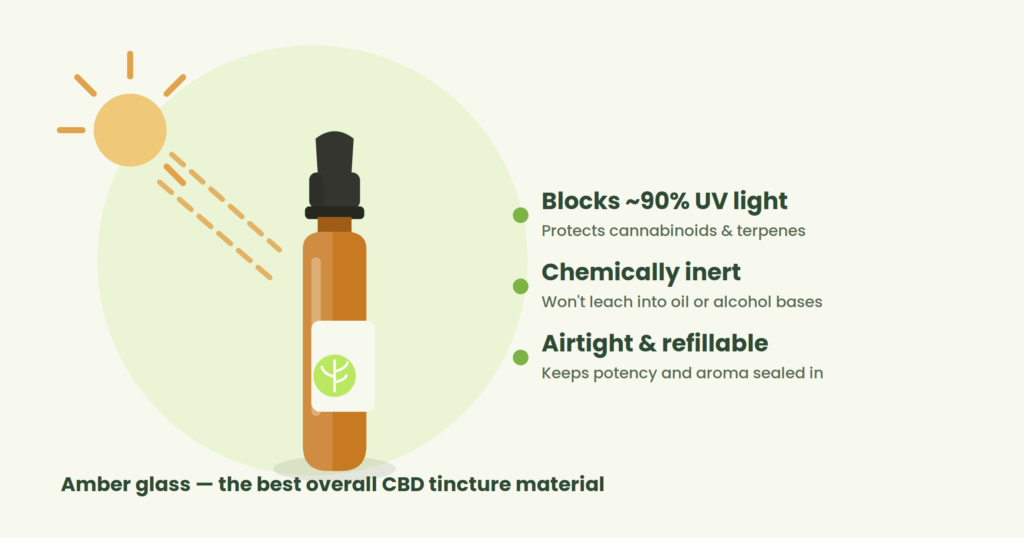
The best material is amber glass because it combines the two properties a tincture needs most: UV protection and chemical inertness. Amber glass absorbs light below roughly 450 nanometers the wavelengths that break down THC, CBD, and terpenes while glass itself never leaches compounds into the liquid, even with high-terpene or alcohol-based formulas. For long-term storage or premium positioning, Miron violet glass is the upgrade; for budget or trial sizes, food-grade amber PET plastic is a reasonable compromise. Whatever the bottle, it should carry a child-resistant dropper and sit inside a tamper-evident printed box.
What makes a good CBD tincture packaging material?
Before comparing specific materials, judge every option against these five criteria:
- Light protection. UV and visible light are the fastest way to lose potency. The material should block or heavily filter light in the 280–450nm range.
- Chemical inertness. Tinctures are often alcohol- or MCT-oil-based. The container must not leach or react this is where glass beats most plastics.
- Barrier & seal. An airtight closure limits oxygen and evaporation, preserving both potency and aroma.
- Child-resistant safety. Ingestible CBD almost always requires a certified child-resistant closure — not just a warning label.
- Brand & sustainability. The material and finish signal quality on the shelf, and recycled glass or PCR/rPET plastic supports eco-conscious buyers.
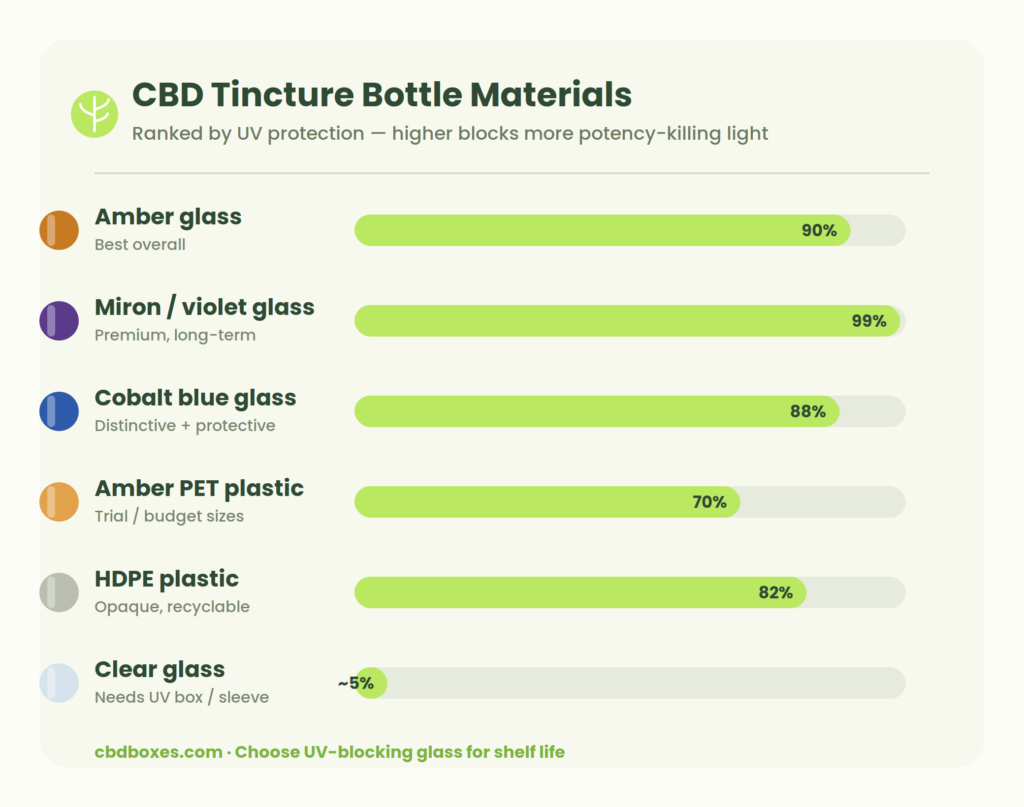
Best Materials for CBD tincture bottles, compared
Amber Glass — Best overall
Amber glass is the industry standard for a reason. It blocks up to ~90% of UV light, is impermeable and nonporous, holds its shape under heat, and keeps flavor and terpenes pure. Boston round and Euro-dropper shapes both offer generous, flat label space for compliance text. It’s the safe default for the vast majority of CBD tinctures.
Miron / Violet Glass — Best for long-term stability
Miron (violet) glass is the premium European standard. It blocks essentially all visible light and a large share of UV-A, making it the gold standard for extended shelf life and high-value formulas. It costs more and hides the liquid completely, so it suits luxury and long-storage products more than fast-moving budget lines.
Cobalt Blue Glass — Strong protection, distinctive look
Cobalt blue blocks around 85–90% of UV slightly less than amber while giving a distinctive apothecary aesthetic. It’s a solid choice when brand color matters and protection is still a priority.
Clear Glass — Looks great, protects least
Clear glass shows off the oil and photographs beautifully, but it blocks essentially no UV. If you use it, you must compensate with a UV-blocking outer box, a full-wrap label or sleeve, and dark storage otherwise potency drops faster.
PET & HDPE Plastic — Budget and trial sizes
Amber PET plastic offers real UV protection at a lower weight and cost, which lowers shipping and breakage attractive for sample and trial sizes. The trade-off is leaching risk: high-terpene and alcohol-based tinctures can interact with plastic over time. If you go plastic, confirm it’s food-grade and passes migration testing with your exact formula. HDPE (resin code #2) has broad chemical compatibility and recycles widely, but is opaque and less premium in feel.
| Material | UV protection | Chemical inertness | Best for |
|---|---|---|---|
| Amber glass | ~90% | Excellent | Most CBD tinctures (best overall) |
| Miron / violet glass | Highest | Excellent | Premium & long-term storage |
| Cobalt blue glass | ~85–90% | Excellent | Distinctive branding + protection |
| Clear glass | Minimal | Excellent | Visibility (needs UV box/sleeve) |
| Amber PET plastic | Good | Fair — verify migration | Trial / budget / low breakage |
| HDPE plastic | Opaque (blocks light) | Good | Cost-driven, recyclable lines |
Glass vs. Plastic Droppers: Which is better?
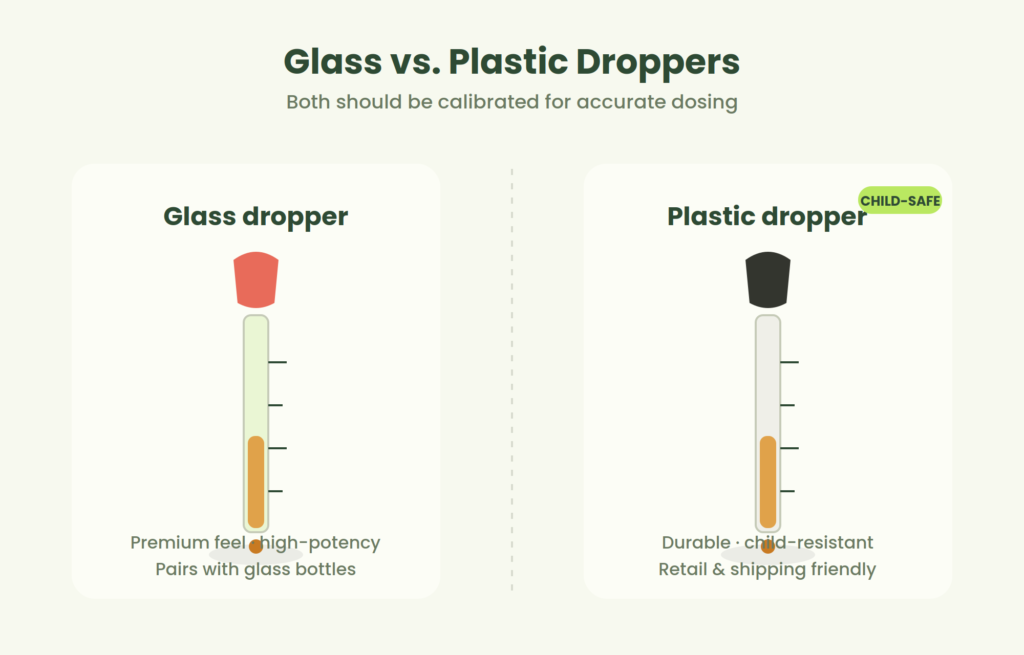
Use a glass dropper with a rubber bulb for premium and high-potency tinctures, and a plastic child-resistant dropper where cost, safety compliance, and shipping durability lead. Both should be calibrated with clear measurement lines for accurate dosing.
Glass droppers feel premium and pair naturally with glass bottles, but they can crack and aren’t inherently child-resistant. Plastic child-resistant droppers are the workhorse for retail CBD: they’re durable, easy to make senior-friendly and child-resistant, and available with tamper-evident bulbs and orifice reducers for a controlled drizzle. Whatever you pick, a dropper with printed hash marks turns dosing into a selling point.
Best Secondary Packaging for CBD Tinctures
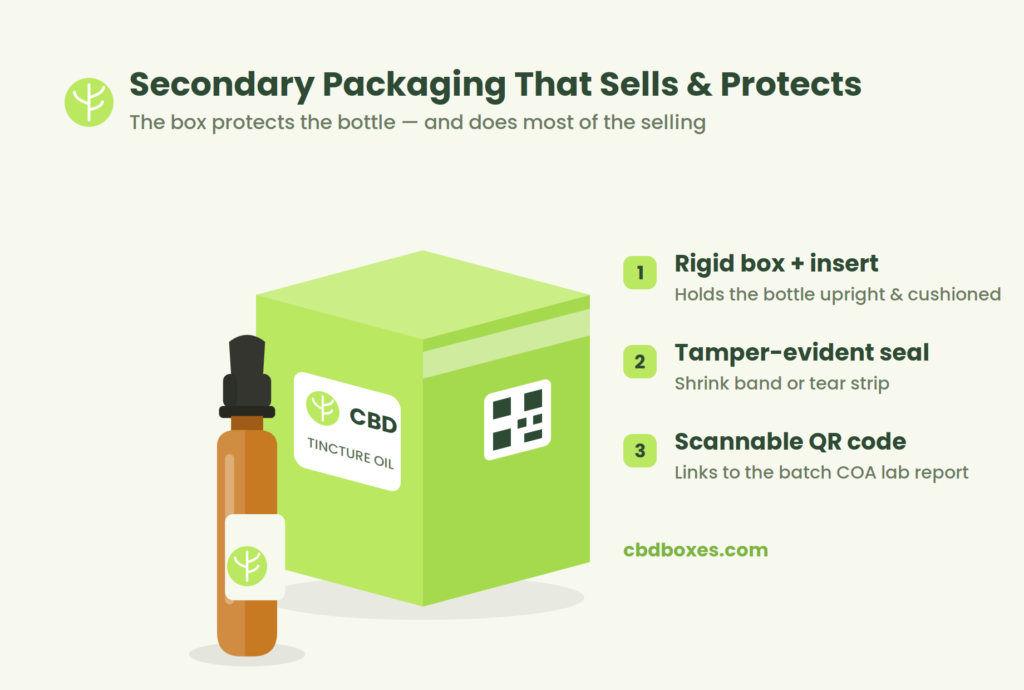
The bottle protects the oil; the box protects the bottle and does most of the selling. Good secondary packaging for tinctures includes:
- Rigid or cardboard tuck-end boxes with a snug fit and a bottle insert that holds the tincture upright and cushions it in transit.
- Kraft boxes for a natural, eco-forward look, or coated rigid stock for a premium, luxury feel.
- Tamper-evident finishing — shrink bands, tear strips, or breakaway seals so customers can see the product is untouched.
- Compliant print: product name, potency, warnings, and a QR code linking to the batch Certificate of Analysis (COA).
Clear glass tinctures especially benefit from an opaque, UV-blocking outer box the box does the light protection the bottle can’t.
What are the Requirements for CBD Tincture Packaging?
Compliance snapshot
Ingestible CBD generally requires child-resistant packaging, tamper-evident features, and accurate labeling with a QR-linked COA. Exact rules vary by state, so verify before any large production run.
While requirements differ across states and hemp vs. cannabis programs, most compliant CBD tincture packaging in 2026 needs to cover:
- Child-resistant closures for ingestible products, tested to recognized standards (e.g., CPSC / ASTM D3475) — several states now require certified “lifetime” CR performance that survives repeated openings, not single-use.
- Tamper-evident features so a consumer can tell if the package was opened before purchase.
- Accurate labeling: product identity, total CBD (and THC where relevant) matching the lab result, full ingredient list, net quantity, batch/lot number, manufacturer name and address, and required warnings such as “Keep out of reach of children.”
- A QR code linking to a batch-specific COA — increasingly mandatory rather than best practice.
- No youth-appealing design and no disease or health claims (words like “treats” or “cures” invite FDA warning letters).
This is general guidance, not legal advice. Regulations vary by state and change often confirm current federal and state rules for every market you sell in before finalizing packaging.
How to Store CBD Tincture
Even the best packaging needs the right storage. To keep a tincture potent:
- Keep it in the amber glass bottle it came in don’t decant into clear containers.
- Store cool and dark: a cupboard or pantry away from windows, stoves, and radiators. Consistent, moderate temperature matters more than refrigeration for most oils.
- Cap it tightly and stand it upright to limit oxygen exposure and dropper leaks.
- Avoid heat and sunlight, which accelerate cannabinoid breakdown.
Stored this way in UV-blocking glass, many CBD tinctures retain a large share of their potency for a year or more.
Frequently asked questions
What is the best CBD packaging?
The best CBD packaging protects potency, meets safety law, and reflects the brand. For tinctures, that means UV-blocking amber or violet glass, a calibrated child-resistant dropper, tamper-evident sealing, and a printed rigid box with a QR code linking to the batch Certificate of Analysis.
What are the requirements for CBD packaging?
Ingestible CBD generally requires child-resistant packaging, tamper-evident features, and accurate labeling product identity, total CBD/THC matching the lab result, ingredient list, net quantity, batch number, manufacturer details, warnings, and a QR-linked COA. Requirements vary by state, so verify before production.
How do you store CBD tincture?
Keep it in its amber glass bottle, tightly capped and upright, in a cool, dark place away from direct sunlight and heat, such as a cupboard or pantry. Correct storage in UV-blocking glass helps most tinctures stay potent for a year or more.
Does packaging affect how potent a tincture stays?
Yes. Light, air, and heat degrade cannabinoids and terpenes over time. UV-blocking amber or violet glass with an airtight, tamper-evident seal slows that degradation, while clear glass and thin plastic allow faster potency loss. Packaging is one of the biggest controllable factors in shelf life it can’t make a formula stronger, but it protects the strength you started with.
Is amber glass better than plastic for CBD tinctures?
For most tinctures, yes. Amber glass blocks more UV and is chemically inert, so it won’t react with alcohol- or terpene-rich formulas. Amber PET plastic is lighter and cheaper and works for trial sizes, but only if it’s food-grade and passes migration testing with your specific formula.
Package your tincture the right way
CBD Boxes designs custom, compliant tincture packaging from amber-glass-ready rigid boxes with bottle inserts to tamper-evident, QR-ready print. Get UV protection, child-safe finishing, and shelf appeal in one build. Get a custom tincture packaging quote
Disclaimer: This article is for informational purposes and is not legal advice. CBD packaging and labeling laws vary by jurisdiction and change frequently. Verify current federal and state requirements for every market before finalizing your packaging.